ERP & Business Systems
Overview
Connect your core business operations in one system
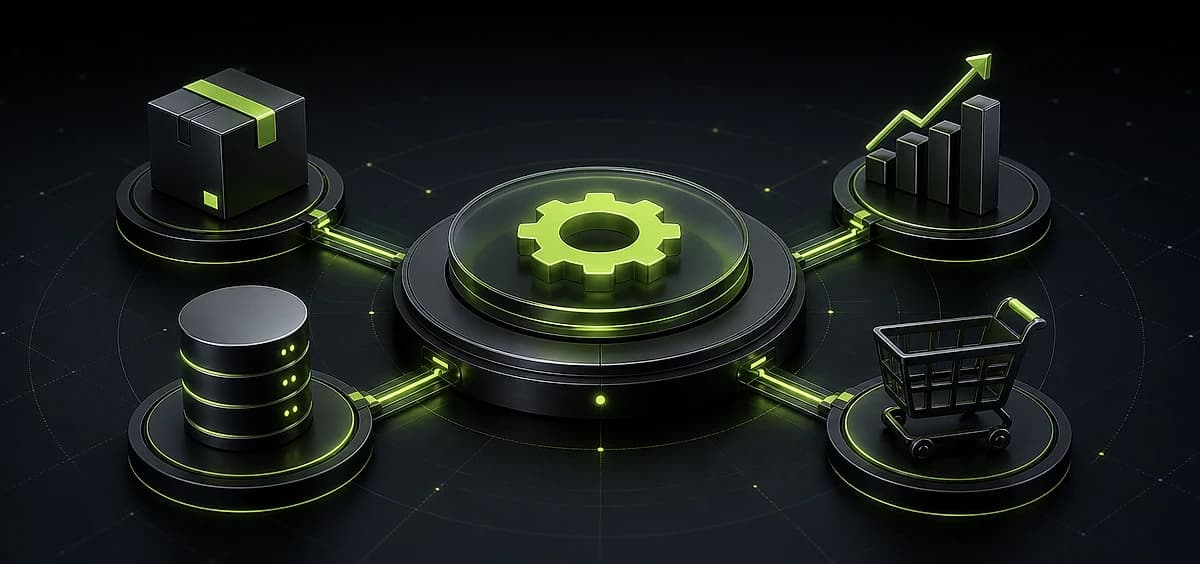
ERP and business systems should give teams a clearer way to manage operations, data, workflows, and decisions across the organization.
Virtual Data IT helps organizations in Jordan and across the GCC implement, customize, integrate, and modernize ERP, CRM, and enterprise business systems around the way they actually operate.
We connect functions such as finance, sales, procurement, inventory, HR, operations, customer management, and reporting to reduce data silos, improve visibility, and create a more controlled operating environment.
Virtual Data IT supports ERP and business system requirements for organizations across:
- •
Jordan
- •
Saudi Arabia
- •
The United Arab Emirates
- •
Qatar
- •
Kuwait
- •
Bahrain
- •
Oman
The challenge is not simply selecting an ERP platform.
It is making sure the system reflects how the organization operates, what information each team needs, which processes should connect, and how the environment can scale with future growth.
Organizations across the region are increasingly moving away from disconnected applications and manual processes toward more integrated business environments, and our approach starts with the operating model first, then configures the technology around it.
Business systems built around your operations
Virtual Data IT delivers the following ERP and business system capabilities:
- •
ERP Implementation: Configure and deploy ERP systems around your operational structure, processes, users, departments, and reporting requirements.
- •
CRM & Customer Management: Create structured systems for customer information, sales activity, follow ups, pipelines, service processes, and customer visibility.
- •
Finance & Accounting Workflows: Connect financial processes, approvals, records, expenses, invoicing, and reporting with the wider business environment.
- •
Procurement & Inventory: Improve purchasing, supplier workflows, inventory visibility, stock movement, approvals, and operational control.
- •
HR & Employee Processes: Digitize employee records, requests, approvals, onboarding, attendance, and other internal processes.
- •
Customization & Extensions: Adapt existing systems with custom workflows, modules, features, dashboards, and functionality where standard configurations are not enough.
- •
Systems Integration: Connect ERP and business platforms with applications, databases, APIs, cloud services, and other enterprise systems.
- •
Dashboards & Reporting: Give teams and decision makers clearer visibility into business activity, operational performance, and critical data.
A structured path from fragmented systems to connected operations
A phased implementation approach designed to move your organization from fragmented systems toward a connected operating environment.
- 1.
Discover: Assess current systems, workflows, business requirements, data, users, integrations, and operational challenges.
- 2.
Design: Define the future process model, system structure, modules, permissions, integrations, and reporting requirements.
- 3.
Configure & Customize: Implement the selected system and build the configurations, workflows, modules, or extensions required by the organization.
- 4.
Migrate & Integrate: Move required data and connect the new environment with existing systems, applications, and databases.
- 5.
Test & Train: Validate functionality, permissions, workflows, reports, integrations, and user scenarios before launch.
- 6.
Go Live & Support: Launch the system, support users through the transition, and continue optimizing the environment as requirements evolve.
Operational Clarity, Built In
A successful ERP or business system should make everyday operations easier to manage, not just store more data. The result should be visible across the organization through connected departments, fewer data silos, clearer workflows, better reporting, stronger operational control, faster access to information, and systems built to support growth.
What Can Be Connected
One business environment across multiple functions
Virtual Data IT helps connect the departments your organization already relies on into a single, coordinated operating environment.
Finance
Accounting processes, expenses, invoicing, approvals, and financial reporting.
Sales & CRM
Customer data, opportunities, follow ups, pipelines, account activity, and sales reporting.
Procurement
Purchase requests, suppliers, approvals, purchase orders, and purchasing workflows.
Inventory
Stock visibility, movements, locations, product records, and inventory processes.
Human Resources
Employee data, requests, attendance, approvals, onboarding, and internal workflows.
Operations
Tasks, processes, service workflows, projects, operational data, and performance visibility.
Management
Dashboards, KPIs, reports, permissions, and cross departmental visibility.
Where ERP Creates Value
Look for the gaps between departments, systems, and data
These are the most common signs that operations, data, and systems have grown apart.
Finance, sales, HR, and operations all work from their own systems.
Finance, sales, HR, procurement, and operations maintain different records and workflows with limited coordination.
We keep entering the same information more than once.
Employees enter the same information more than once or work from different versions of the same data.
It takes too long to get a clear picture of performance.
Management depends on manual reports, spreadsheets, or repeated data collection before understanding business performance.
Every approval turns into an email thread.
Approvals, requests, documents, and internal communication are handled manually with limited visibility.
Our current system can't keep up with how we actually work.
Legacy systems become difficult to customize, integrate, maintain, or scale as the business changes.
As we grow, our processes are getting harder to control.
More employees, locations, customers, transactions, and products make existing processes harder to control.
The Right Approach
The right approach depends on what already exists
Not every organization needs a completely new ERP.
New Implementation
For organizations moving from spreadsheets, manual processes, or disconnected systems into a structured business platform.
Existing System Customization
For businesses that already have an ERP or CRM but need better workflows, reporting, permissions, integrations, or functionality.
System Integration
For organizations using multiple platforms that need to exchange information more effectively.
Legacy Modernization
For environments where existing technology is becoming difficult to maintain, scale, integrate, or adapt.
Process Automation
For teams that have suitable systems but still depend on manual approvals, repetitive tasks, or disconnected workflows.
Build a more connected operating environment
Tell us where disconnected systems, manual processes, poor reporting, or limited visibility are creating friction. We'll help you determine what should be implemented, integrated, customized, or modernized first.
Discuss Your Business SystemsFAQ