

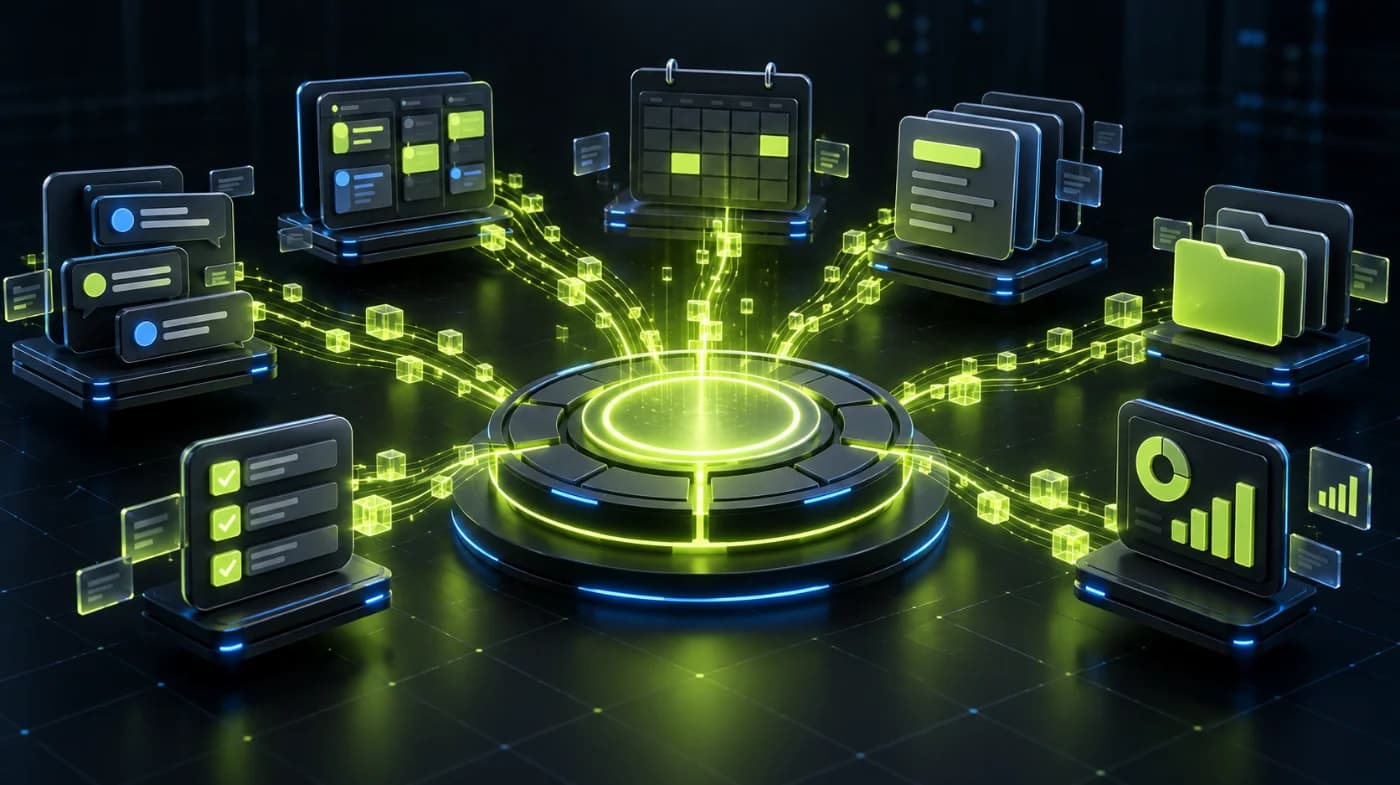
This article is part of VDIT's TechTeek series for organizations in Jordan and the GCC. TechTeek is VDIT's work management product for connecting projects, tasks, tickets, and workflow automation in one operational environment.
The problem is not a lack of software: Many growing companies have already invested in project tools, chat platforms, ticketing systems, spreadsheets, email, shared drives, and specialist applications. Yet managers still ask the same questions: Who owns this? What is blocked? Which request is urgent? Has the customer been updated? Which deadline is at risk? The contradiction is important. More software should create more control, but it often creates more places to look. A project may be planned in one tool, discussed in chat, updated in a spreadsheet, escalated by email, and converted into a support ticket somewhere else. The work exists, but its context is fragmented. For organizations in Jordan and the GCC that are adding teams, customers, locations, and services, this becomes an operating model problem rather than a simple productivity issue.
Tool sprawl creates invisible coordination work: Every additional work system creates another boundary employees must cross. A team member checks chat for context, opens a project board for the task, searches email for an approval, then visits the helpdesk for the customer history. None of those actions looks expensive alone. Repeated across a company, they create a large amount of coordination work that is rarely measured. Context switching also weakens accountability. When a request exists in several places, people can reasonably believe somebody else owns the next action. Managers then compensate with meetings, status messages, and manual follow ups.
Map the work before changing the tools: Before replacing software, map how work actually moves. Start with one recurring process such as a customer implementation, campaign delivery, technical issue, or internal request. Identify where the work begins, which roles touch it, where decisions happen, what information is required, and where the status is recorded. Then mark every point where an employee has to copy information, ask for an update, create the same item again, or move context manually. Those are the operational seams that a better work management model should reduce.
Four layers of work that should stay connected: Most operational teams deal with four different but related layers. Projects organize larger outcomes and milestones. Tasks define individual actions. Tickets capture requests, incidents, and issues. Workflows define how work should move between people and stages. Treating these as completely separate worlds creates friction. A ticket may create a task. A task may become part of a project. A project may require an approval workflow. A customer issue may need delivery, engineering, and support to collaborate before it is resolved. The value of a unified work model is not that every item looks identical. It is that the relationship between those items remains visible.
Visibility should answer operational questions, not create more reporting: A useful work management environment should make it easier to answer practical questions without asking five people for updates. What is overdue? Which team is overloaded? Which tickets are waiting on delivery? Which projects contain unresolved blockers? Which requests have no owner? What changed this week? That is different from producing more dashboards. The goal is to make the underlying work structured enough that visibility becomes a byproduct of execution rather than a separate reporting exercise.
Where TechTeek fits: TechTeek is designed around the idea that projects, tasks, tickets, and workflow automation should operate as connected parts of work management. The objective is to reduce the gaps created when teams manage related work across disconnected tools. That makes the platform relevant to SaaS teams, IT services companies, agencies, BPO operations, consulting teams, support organizations, and other businesses where delivery and service work constantly cross department boundaries.
A practical consolidation test: Do not consolidate tools simply to reduce subscription count. Consolidate when doing so improves the operating model. Ask whether teams can preserve the specialist capabilities they genuinely need while removing duplicate tracking, duplicate updates, and unnecessary handoffs. A good test is simple: if a manager can understand ownership, priority, progress, blockers, and customer impact without reconstructing the story from several applications, the work environment is becoming more coherent.
Related VDIT Resources and TechTeek Series: Related VDIT Resources • TechTeek • Workflow Automation • Systems Integration and Support • When Your Business Outgrows Spreadsheets and Disconnected Software • Talk to Sales The TechTeek Work Management Series Part 1: Your Team Has More Work Tools Than Ever. So Why Is Work Still Scattered? Part 2: When a Customer Ticket Becomes a Project: Why Support and Delivery Should Not Live in Separate Worlds Part 3: 7 Signs Your Company Has Outgrown Its Project Management Tool Part 4: Stop Managing Internal Requests Through Email and Chat Part 5: What Should a Modern Work Management Platform Actually Do in 2027? Ready to Make Work Easier to Manage? Explore the TechTeek product page to see how projects, tasks, tickets, and workflows can operate in a more connected environment. If you want to discuss your current tool stack and operating process, talk to the VDIT sales team.
Frequently Asked Questions: 1. What is work management software? Work management software helps teams organize and coordinate projects, tasks, requests, tickets, responsibilities, deadlines, and workflows in a structured operating environment. 2. How is work management different from project management? Project management focuses primarily on planned initiatives, milestones, and deliverables. Work management is broader and can also include recurring tasks, service requests, tickets, internal workflows, and operational work. 3. When should a company consolidate work management tools? Consolidation is worth evaluating when teams repeatedly duplicate updates, lose context between systems, depend on manual status reporting, or use several applications to manage connected stages of the same process. 4. Can TechTeek be used for both projects and support tickets? TechTeek is positioned around connected projects, tasks, tickets, and workflow automation, allowing organizations to manage different types of work within a more unified environment. 5. How can we assess whether TechTeek fits our current workflow? Start by mapping your existing tools, handoffs, recurring requests, reporting needs, and approval stages. VDIT can then discuss how TechTeek and related integration or automation services could fit that operating model.
What to do next Choose one high volume workflow and document every system, message, spreadsheet, and manual update involved. That gives you a real baseline for deciding whether the problem is process design, integration, or work management. Virtual Data IT can help organizations assess the workflow and determine where TechTeek, workflow automation, systems integration, or broader technology changes can remove operational friction.