

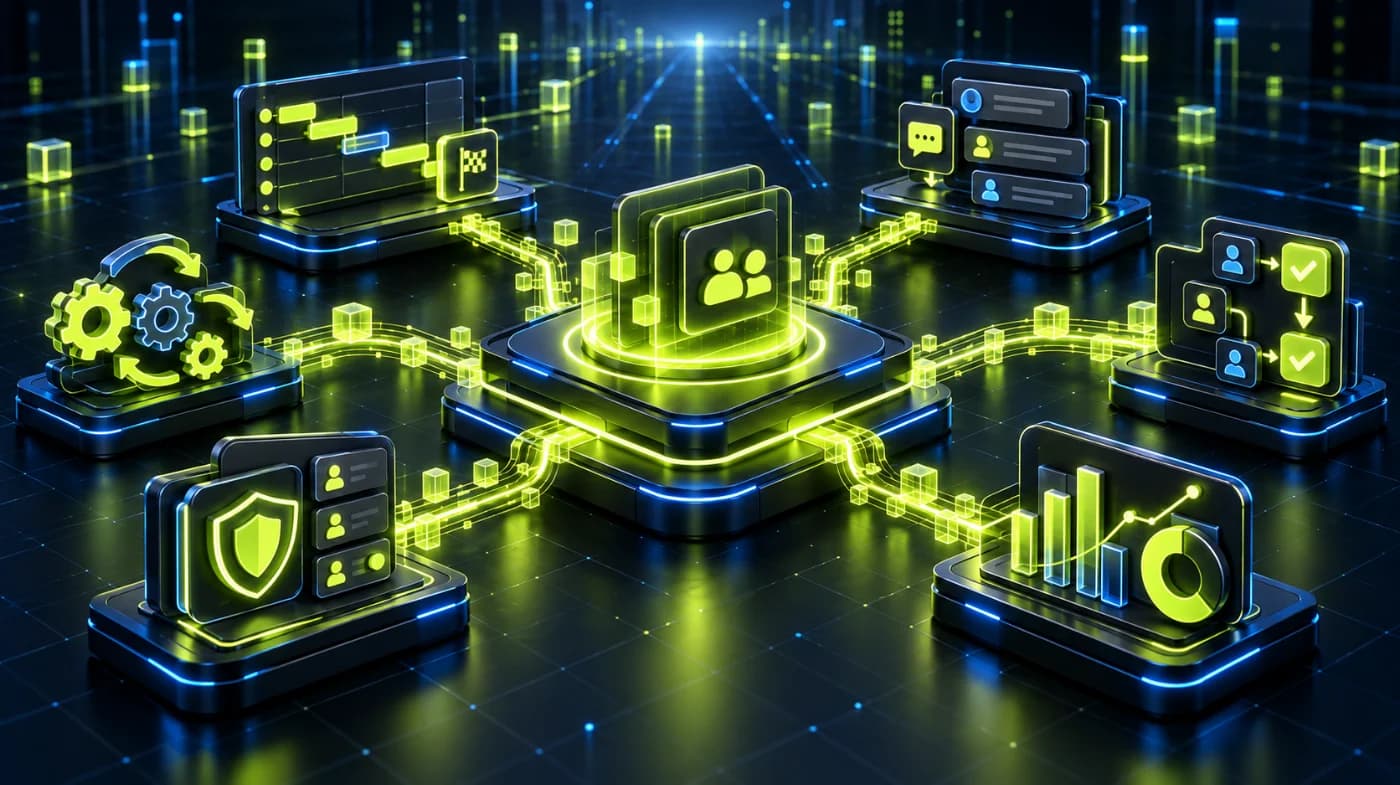
This article is part of VDIT's TechTeek series for organizations in Jordan and the GCC. TechTeek is VDIT's work management product for connecting projects, tasks, tickets, and workflow automation in one operational environment.
The market has moved beyond task lists: Task boards remain useful, but organizations now expect work platforms to support a much broader operating environment. Projects, customer issues, recurring operations, internal requests, approvals, service workflows, and management reporting increasingly overlap. The right question for 2027 is therefore not which platform has the longest feature list. It is whether the platform can represent how work actually moves through the organization.
1. It should support different types of work without losing the relationships: A project milestone, a customer ticket, an internal request, and a recurring operational task are different objects. A modern platform should respect those differences while allowing them to connect. For example, a ticket may create a task, a task may belong to a project, and the project may trigger an approval workflow. Management should be able to understand that chain without rebuilding it manually.
2. It should make ownership explicit: Every important item should have a clear owner or accountable team. Shared visibility without accountability simply creates a larger list of things everyone can see but nobody owns. Ownership also needs to survive handoffs. When work moves from support to delivery or from requester to approver, the platform should make the next responsibility clear.
3. Workflow automation should follow business rules: Automation should do more than create recurring tasks. It should help route work, trigger actions, request approvals, notify the right people, escalate exceptions, and move items based on defined conditions. The best automation starts from a well understood process. Organizations should resist automating unnecessary steps simply because the platform makes it possible.
4. Reporting should come from execution data: Managers should not need employees to update a second reporting system after completing the work. The operational data created during execution should support views of progress, workload, backlog, overdue items, ticket categories, project risk, and workflow bottlenecks. This creates a stronger link between what teams do and what leaders see.
5. Permissions and governance must scale with the organization: As adoption expands, not every user should see or change everything. Teams need sensible access controls, role design, workspace structure, and governance so the platform remains useful as more departments participate. Governance also includes naming conventions, ownership rules, archive practices, and decisions about which processes belong in the platform.
6. Integration matters because work does not exist in isolation: Work management platforms sit inside a larger technology environment. CRM, ERP, finance, communication, custom applications, and other systems may contain information required by the workflow. Organizations should evaluate which integrations are truly necessary and where systems integration can remove duplicate entry or connect work to upstream and downstream processes.
7. Adoption is a design requirement: A platform only creates value when teams actually use it. Overcomplicated structures, excessive fields, confusing statuses, and unnecessary workflows can drive employees back to spreadsheets and chat. Start with a small number of high value processes. Make the experience clear. Train teams around the operating model, not just the interface. Expand after the first workflows are stable.
8. The platform should support improvement over time: Operational systems should generate learning. Which workflow has the most waiting time? Which ticket types repeatedly become projects? Which teams receive the most internal requests? Where are approvals creating delays? A modern work platform should make those patterns easier to identify so the organization can improve the process rather than simply record it.
A practical buyer scorecard: Evaluate platforms against real scenarios rather than demo features. Test a customer escalation, a cross department project, an internal service request, an approval process, and a recurring operational workflow. For each scenario, assess intake, ownership, handoffs, automation, visibility, permissions, reporting, integration requirements, and ease of use. A platform that performs well across your real workflows is more valuable than one that wins a generic feature comparison.
Where TechTeek fits in the 2027 work model: TechTeek brings projects, tasks, tickets, and workflow automation into one work management environment. Its relevance is strongest where organizations want to reduce the fragmentation between delivery, support, operations, and internal service work. VDIT can also support the surrounding technology environment through workflow automation, systems integration, custom software, digital transformation, and technology consulting when the requirement extends beyond the platform itself.
Related VDIT Resources and TechTeek Series: Related VDIT Resources • TechTeek • Workflow Automation • Systems Integration and Support • Digital Transformation • Talk to Sales The TechTeek Work Management Series Part 1: Your Team Has More Work Tools Than Ever. So Why Is Work Still Scattered? Part 2: When a Customer Ticket Becomes a Project: Why Support and Delivery Should Not Live in Separate Worlds Part 3: 7 Signs Your Company Has Outgrown Its Project Management Tool Part 4: Stop Managing Internal Requests Through Email and Chat Part 5: What Should a Modern Work Management Platform Actually Do in 2027? Ready to Make Work Easier to Manage? Explore the TechTeek product page to see how projects, tasks, tickets, and workflows can operate in a more connected environment. If you want to discuss your current tool stack and operating process, talk to the VDIT sales team.
Frequently Asked Questions: 1. What should a modern work management platform include? It should support the types of work the organization actually manages, such as projects, tasks, tickets, requests, workflows, ownership, automation, reporting, permissions, and relevant integrations. 2. How should companies compare work management platforms? Use real business scenarios instead of relying only on feature lists. Test how each platform handles intake, ownership, handoffs, automation, visibility, permissions, reporting, and user adoption. 3. Why are tickets important in a work management platform? Tickets provide a structured way to capture requests, incidents, and service work. When connected with tasks and projects, they help preserve context as work moves from request to execution. 4. How important is workflow automation when selecting a platform? It is important when work involves routing, approvals, escalations, recurring actions, or cross team handoffs. The automation should reflect a clear business process rather than automate unnecessary complexity. 5. What makes TechTeek different from a basic project management tool? TechTeek is positioned as a broader work management environment that combines projects, tasks, tickets, and workflow automation so organizations can manage planned and operational work in a more connected way.
Explore the TechTeek product page to see how projects, tasks, tickets, and workflows can operate in a more connected environment. If you want to discuss your current tool stack and operating process, talk to the VDIT sales team.